

What Is Ultrasonic Pest Control?
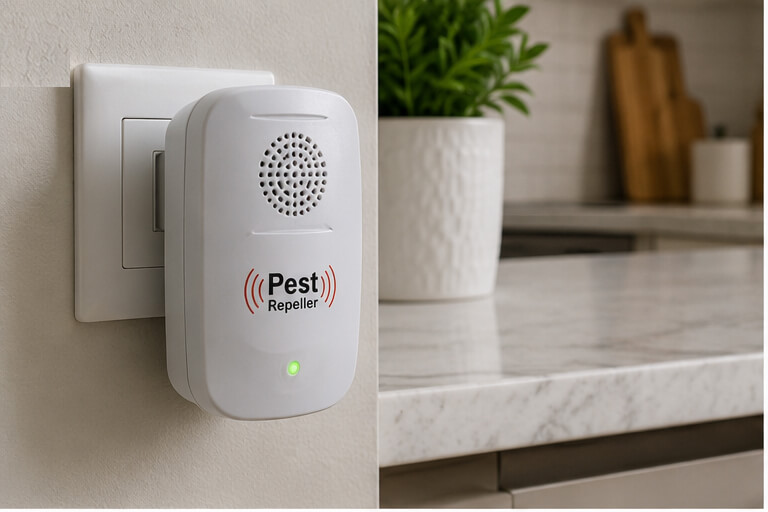
Ultrasonic pest control devices are plug-in units that emit high-frequency sound waves, typically above 20,000 Hz and beyond the range of human hearing. The marketing promise is appealing: simply plug the device into a socket and the sound will drive away rodents, cockroaches, spiders, mosquitoes, and other household pests without chemicals, traps, or any effort on your part.
They’ve been on the market for decades and continue to sell well, largely on the back of attractive packaging and the desire for a simple, hands-off solution. But does ultrasonic pest control work in any meaningful sense? Based on the available evidence, the answer is almost certainly no, and relying on one could leave your home exposed to a growing infestation while you believe the problem is being handled.
How Ultrasonic Pest Control Devices Are Supposed to Work
Manufacturers claim that ultrasonic frequencies interfere with the nervous systems of pests, creating enough discomfort that they flee the area. Some devices cycle through multiple frequencies to prevent pests from adjusting to a single tone.
The appeal to consumers is obvious:
- No chemicals or poisons in the home
- No traps to set, check, or empty
- Marketed as safe for children and most pets
- Extremely low maintenance
Unfortunately, appealing marketing is not the same as proven results, and the science behind these devices tells a very different story.
What the Research Actually Shows
The Science Does Not Support These Devices
The evidence against ultrasonic pest control is substantial and consistent. The U.S. Federal Trade Commission (FTC) has issued repeated warnings to manufacturers, cautioning them against making claims about their products that are not supported by credible scientific evidence. Several companies have faced legal action over misleading advertising.
Independent studies have found that while some pests may show a brief behavioural response to ultrasonic frequencies, this effect fades quickly. Pests are adaptive creatures. When food, water, and shelter are available, they will tolerate discomfort far more readily than they will abandon a good nesting site.
The short version: does ultrasonic pest control work long enough to solve an infestation? No. And by the time you realise it isn’t working, the problem may have grown significantly worse.
Does Ultrasonic Pest Control Work on Mice and Rats?
Rodents are the most commonly targeted pest for these devices, and the research here is particularly clear. Studies have shown that mice and rats may show brief signs of stress when first exposed to ultrasonic frequencies, but they habituate to the sound within a matter of days. Once habituated, they simply go about their normal behaviour, including feeding, nesting, and breeding, as if the device were not there at all.
Rodents are motivated by survival. They will not leave a property that offers food and warmth simply because of a sound they have learned to ignore. Placing an ultrasonic device in your kitchen is not a pest control strategy. It is a way of feeling like you are doing something while the infestation continues unchecked.
Does Ultrasonic Pest Control Work on Insects?
The case for effectiveness against insects is even weaker. Cockroaches, ants, and most other common household insects do not respond meaningfully to ultrasonic frequencies. Studies specifically targeting mosquito repeller devices have found they provide no reliable protection whatsoever.
Why Ultrasonic Devices Consistently Fail
Sound Cannot Pass Through Walls or Furniture
Ultrasonic sound waves travel in straight lines and are blocked by solid objects. Walls, cupboards, furniture, and flooring all interrupt the signal. This means a single device only covers a very limited, unobstructed area. Pests living inside wall cavities, beneath floorboards, or behind appliances are completely unaffected. Since these are precisely the places pests tend to nest, the device is targeting the one area they are least likely to be.
Pests Adapt Faster Than You Might Expect
Habituation is a well-documented process in animal behaviour. Persistent stimuli that do not result in actual harm are quickly disregarded. Research on rodents shows this can happen within a week of first exposure. After that point, the ultrasonic device provides no deterrent effect at all.
The Market Is Largely Unregulated
There is no standardised testing requirement for ultrasonic pest control devices. Manufacturers are not required to prove their products work before selling them. This has allowed a large number of low-quality, ineffective units to flood the market. Many emit frequencies far too low to have any effect, while others cycle through ranges that simply do not correspond to the sensory thresholds of the target pests. Consumers have no reliable way to distinguish a marginally credible product from one that does nothing at all.
The Risk of Relying on Ultrasonic Pest Control
This is the point that matters most for homeowners. Choosing an ultrasonic device over proven pest control methods does not just mean spending money on something ineffective. It means allowing an active infestation to continue, and potentially worsen, during the time you believe it is being addressed.
Rodent populations can grow rapidly. A small mouse problem can become a serious infestation within weeks. Cockroach colonies breed quickly and are notoriously difficult to eliminate once established. Every week spent waiting for an ultrasonic device to work is a week the infestation has to expand.
If you suspect you have a pest problem, the worst thing you can do is assume a plug-in device is handling it.
What Actually Gets Rid of Pests
Proven pest control relies on identification, targeted treatment, and prevention. The most effective approaches include:
For rodents:
Professional inspection to identify entry points and nesting sites
Snap traps and bait stations placed by trained technicians
Physical exclusion by sealing gaps, cracks, and entry points
Ongoing monitoring to catch reinfestation early
For insects:
Targeted pesticide treatment applied by licensed professionals
Bait stations for cockroaches and ants
Elimination of moisture, food sources, and harborage points
Structural recommendations to prevent future access
For all pest types:
A thorough site survey to understand the scale and source of the problem
A treatment plan tailored to your specific property
Follow-up visits to confirm the infestation has been fully resolved
No plug-in device can offer any of this. Professional pest control works because it addresses the actual cause of the problem, not just the symptom.
Does Ultrasonic Pest Control Work? The Verdict
The evidence is clear. Does ultrasonic pest control work as a reliable solution to a pest infestation? No. These devices are not supported by credible scientific research, they have been flagged by consumer protection agencies for misleading marketing, and pests adapt to them quickly even in the rare cases where an initial effect is observed.
Ultrasonic devices may seem like a convenient, low-cost option. But convenience is not the same as effectiveness, and a pest infestation is not something you can afford to leave to chance. If you have pests in your home, the only approach that will actually solve the problem is one based on expertise, proper inspection, and targeted treatment.
If you are dealing with rodents, insects, or any other unwanted guests, contact our team today. We will assess the situation properly and give you a treatment plan that actually works.